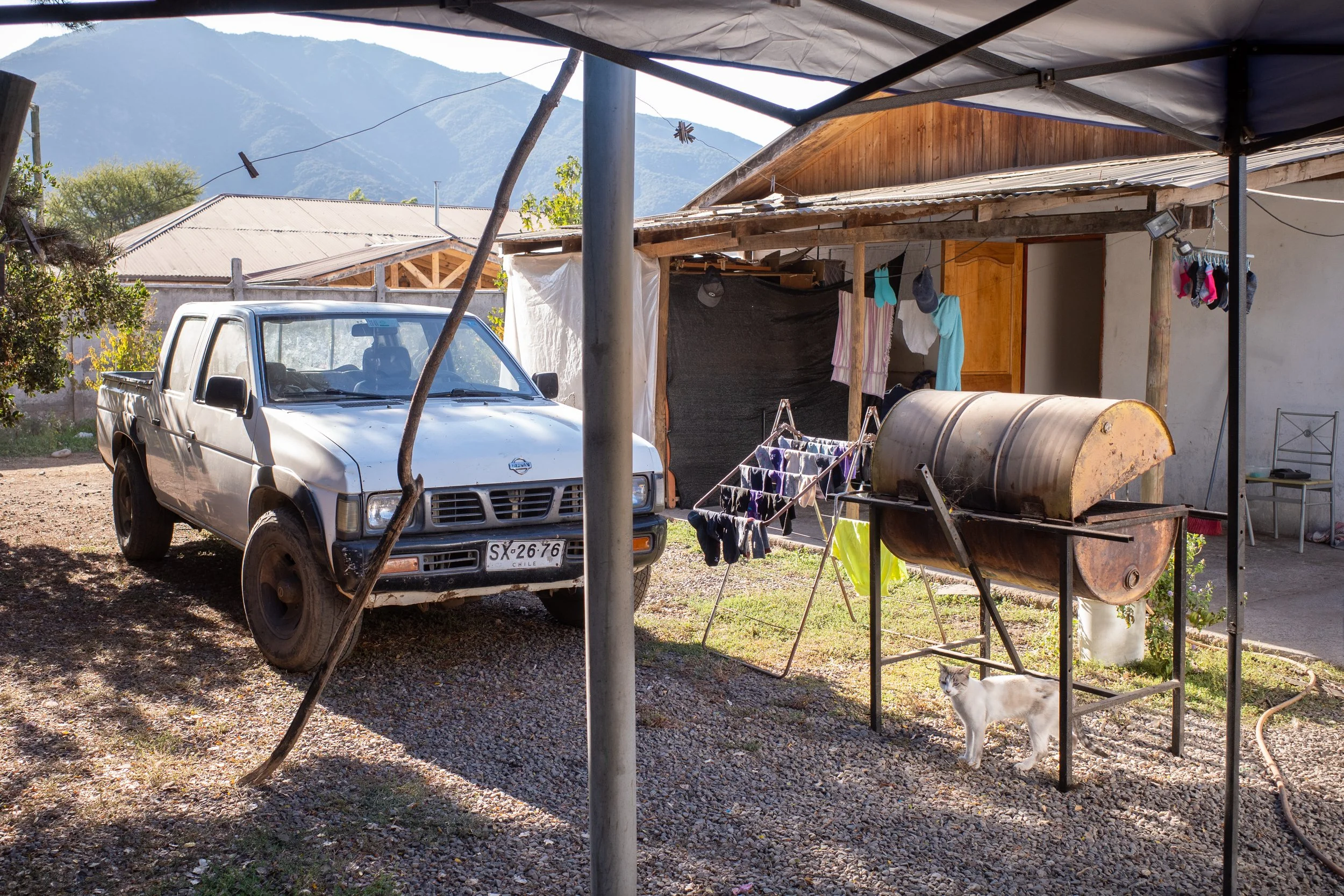
The Asado to the people of Angostura is what the street party would have been to your nan, except in Angostura it happens every week and your nan isn’t there. I have recently returned from working harvest as a cellar hand in the Colchagua Valley, Chile. Long hours built an apatite, one which could only be countered by an Asado. An Asado is essentially a BBQ on anabolic steroids-maybe literally based on the slabs of meat be slapped on to hot bars. The feast is cooked initially over open flames, and eventually humming embers. The fire is often contained in half an oil drum, and the oil drum in the garden of the host.
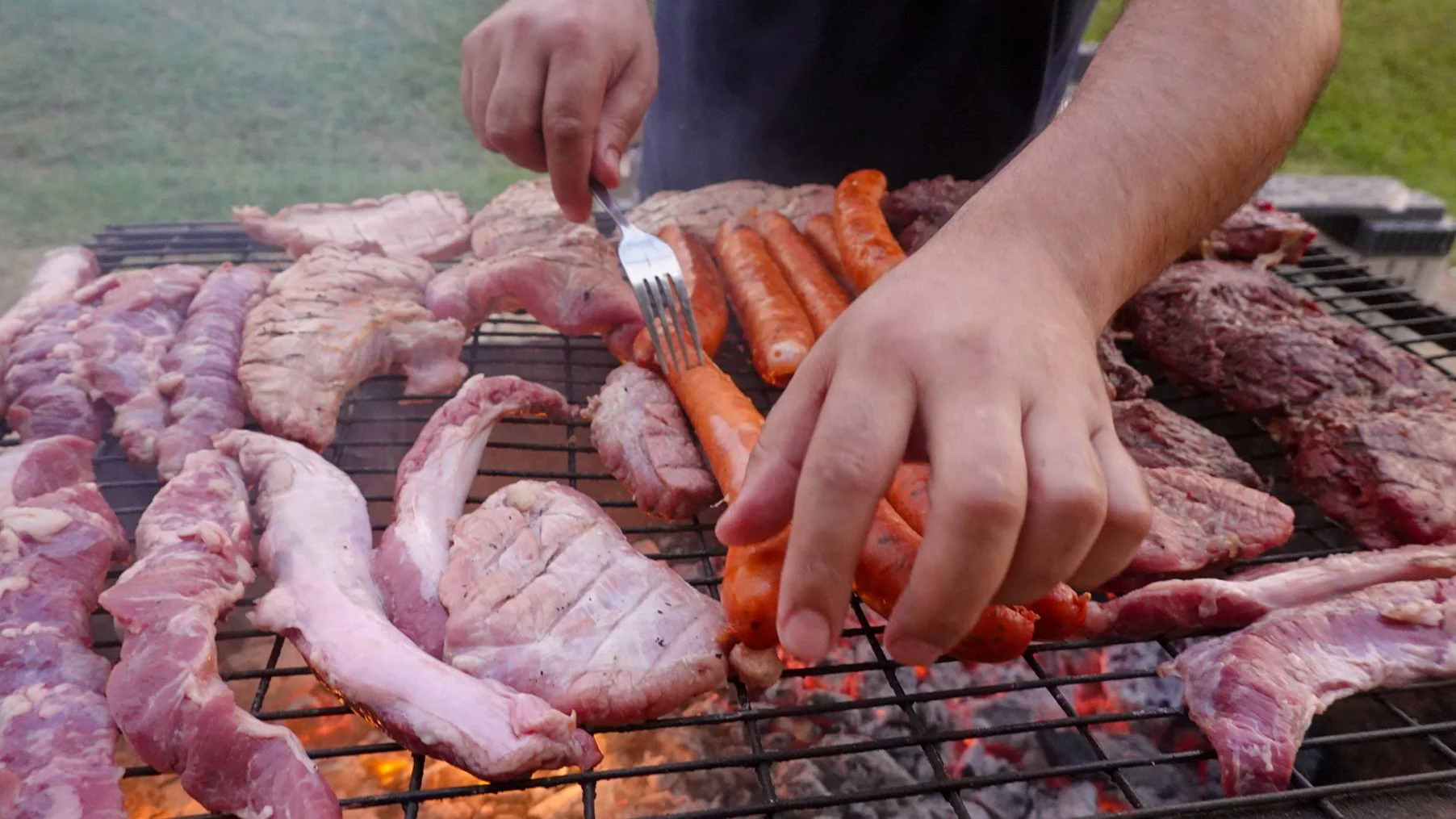
The Asado is a choreographed dance of a ceremonial supper, with the first move always being made by the Choripán. Much like an English BBQ starting with a burnt sausage in a finger roll, the Choripán is at its core the same: a quick-cooking sausage in a piece of bread to stave off the hunger of guests until the more substantial food things are ready to be eaten. ‘Choripán’ is a portmanteau of ‘Chorizo’ and ‘Pan’-Chorizo being used as a generic term for a spicy sausage, and Pan being Spanish for bread. Several links of these spicy sausages are often thrown over the flames as they die into embers, perfectly charring and blistering the synthetic casing that surrounds the meat before the hum of the embers can finish them off. The bread (specifically Marraqueta) is torn into individual servings and warmed on the Chorizo as they finish. The bread is then stuffed with the meat and typically finished with mayonnaise and a Pebré. Pebré is made up of diced tomato and onion with a touch of sliced coriander. This is then lightly pickled in white wine vinegar, lemon juice and salt before olive oil finishes the dressing. As you can imagine, this fresh zippy dressing is a wonderful compliment to the salty spicy Choripán.
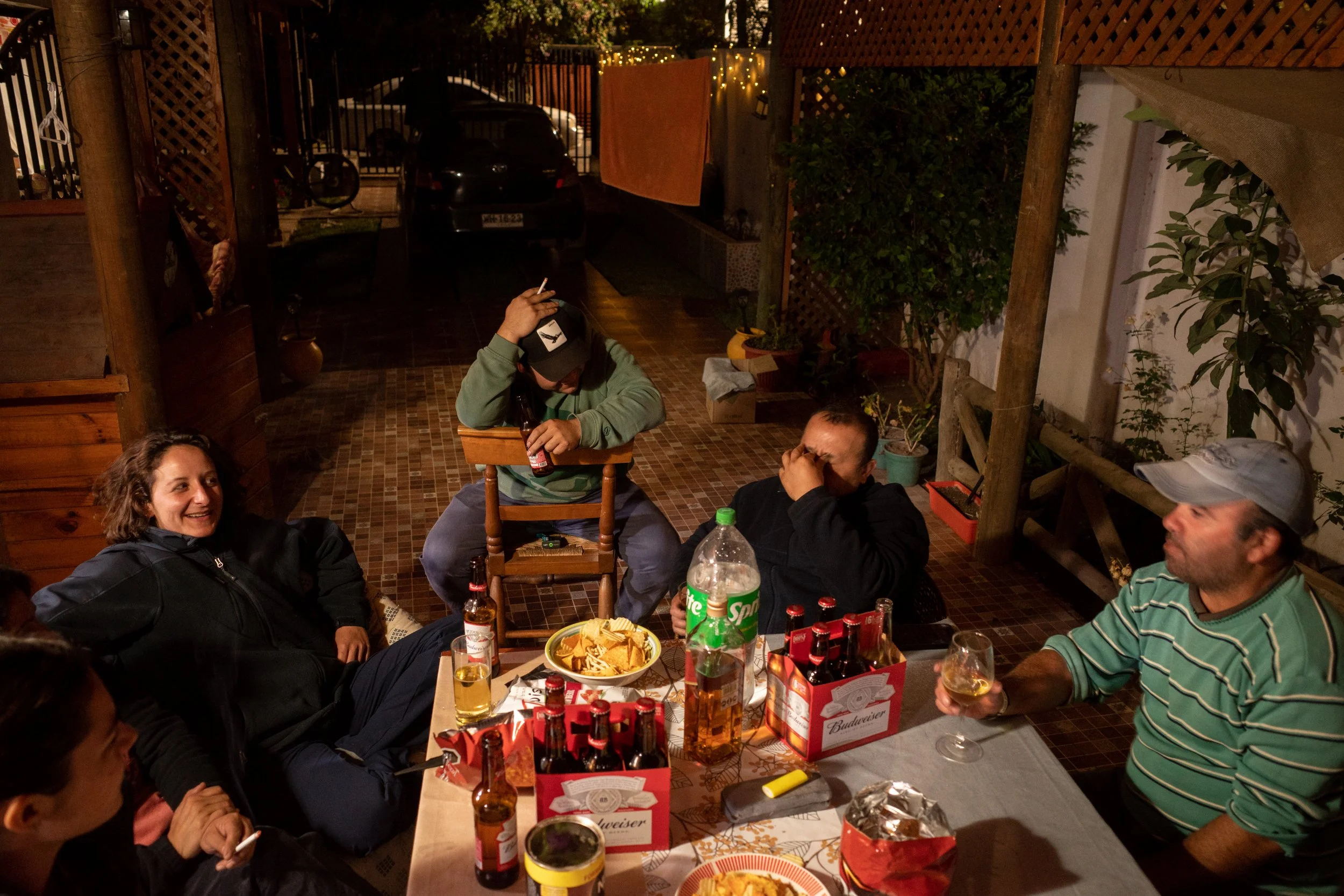
The Choripán (and indeed the rest of the evening) comes with a pairing: a Pisco, served either blanco or negro. At the core of this drink is the eponymous Pisco-a clear brandy made from distilled grape juice. Vineyards in regions further north than Colchagua produce the fruit used for this spirit, thanks to the intense ripeness brought on by their dry, sun-drenched exposure at the edges of the Atacama Desert. This is served either blanco-with the addition of ice and Sprite-or negro, with, you guessed it, Coca-Cola. My personal preference was blanco; it was far more refreshing when consuming unholy quantities of spicy, salty sausage.
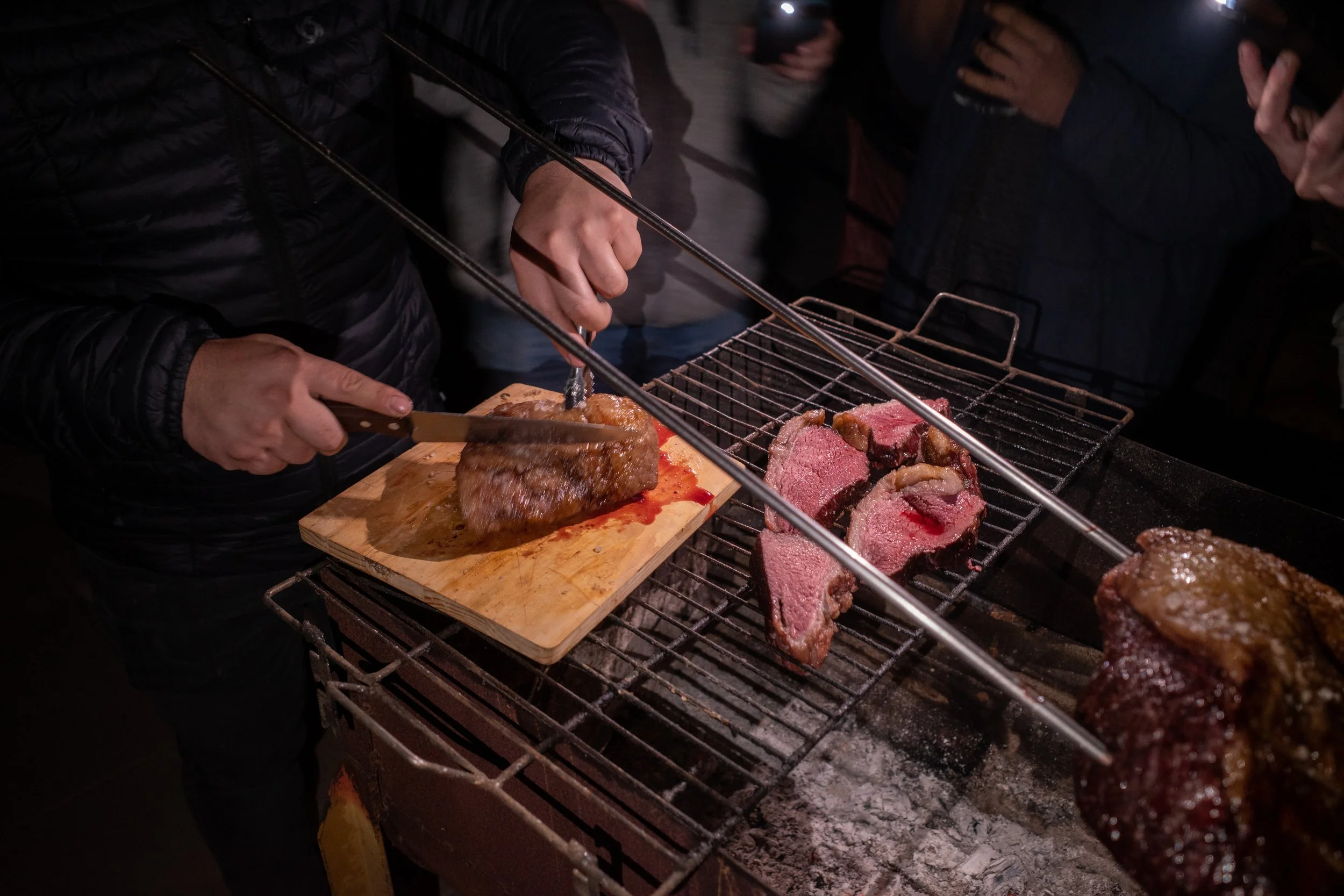
Before I explain the next cuts of meat, I’ll describe to you the cooking style and the cuts we’re dealing with. Each piece of meat is huge and readily available in the supermarket. For instance, one could not purchase a fillet steak pre-packaged in the beef section at the local supermarket, however, one could purchase an entire fillet of beef-with chateaubriand included-for about 36 pounds. The larger cuts are essentially roasted whole over hours, rather than being pre-portioned and cooked as individual servings. Electronic spit roasters are available in some supermarkets for ease of roasting.
And so, the next thing layered onto the coals is a great slab of pork belly, skin removed and fat side down onto the embers. And the main event: an entire picanha steak, cooked for around three and a half hours until wall-to-wall medium rare. The picanha steak, coming from the end of the rib roast, is protected by a layer of fat, making the joint self-baste as it renders and rotates. The pork is often a morsel, presented to you on the end of a knife. An inch-by-inch cube of pork belly that has been coated in lemon juice. It is so generously seasoned with salt and has spent so much time on the flame and smoke that it almost tastes cured. Of course, you find yourself back at the chopping board, Pisco in hand, muttering “por favor” to the Asado master, gasping for another meaty cube. The steak is removed and sliced thick. It can be served in leftover marraqueta as a sort of steak sandwich, but more often than not, it’s served solo-much like the pork-as a morsel to be savoured.
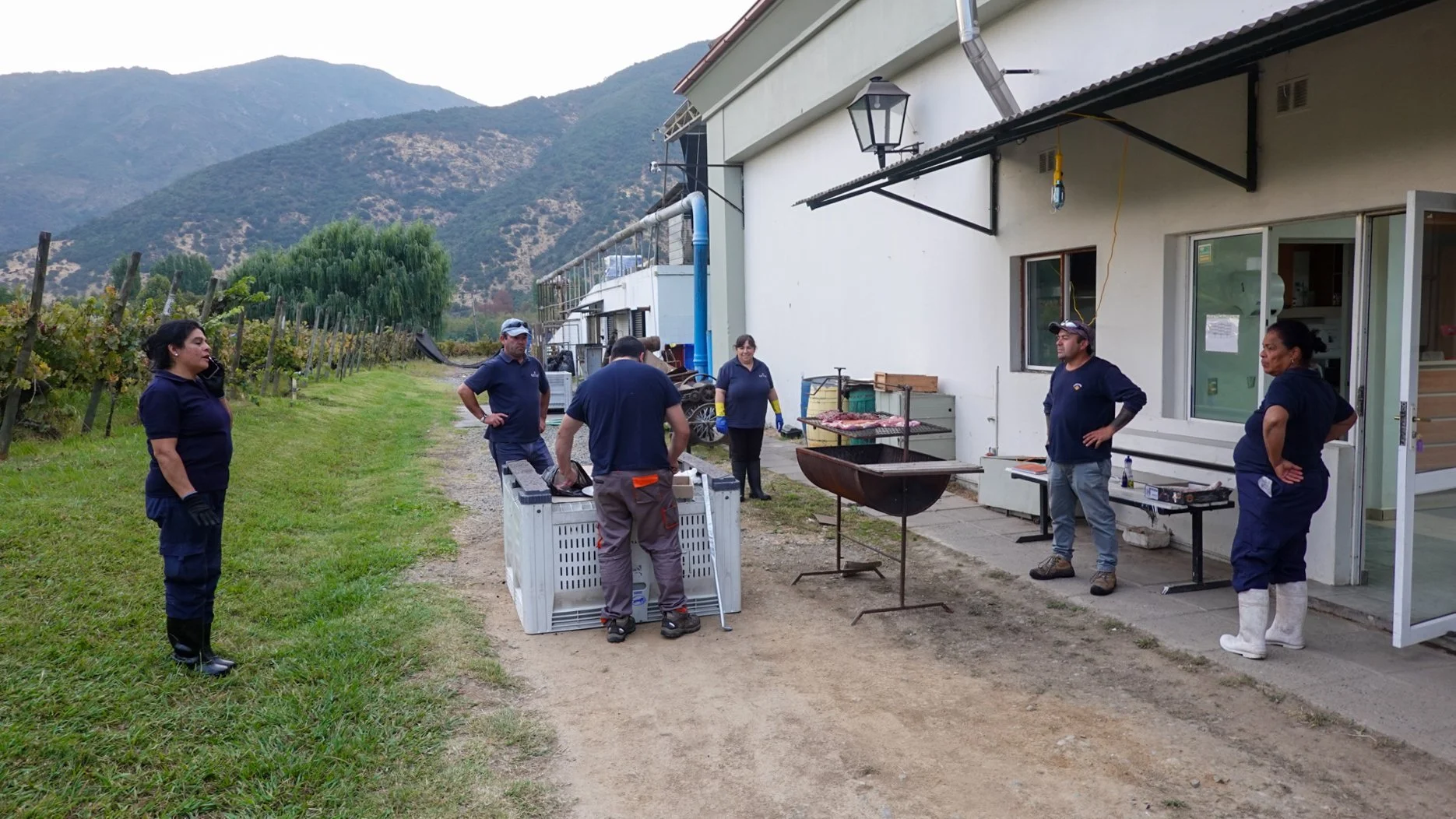
The Asado isn’t a sit-down meal. It’s essentially finger food-offered casually and eaten standing, between sips of Pisco. There’s no call to eat and sit when the food is ready. Instead, it lands in your hand quietly: a cube of pork passed to you on the end of a knife, a slice of beef laid into your palm mid-conversation. There are no plates, and the only cutlery is used to spoon Pebré onto a Choripán. There’s pleasure in the pace, and the meat is eaten in generous intervals. The goal isn’t just to eat, but to stay. Meat is expensive, and in harvest, time is scarce, yet both are offered freely. It’s not indulgence, but commitment that reaffirms community and generosity. Interestingly, when we weren’t sleeping or working, I kid you not, we were having an Asado, and that is exactly why I will remember them so vividly and fondly. Asados are not a rarity in Angostura, and that is what makes them so special.